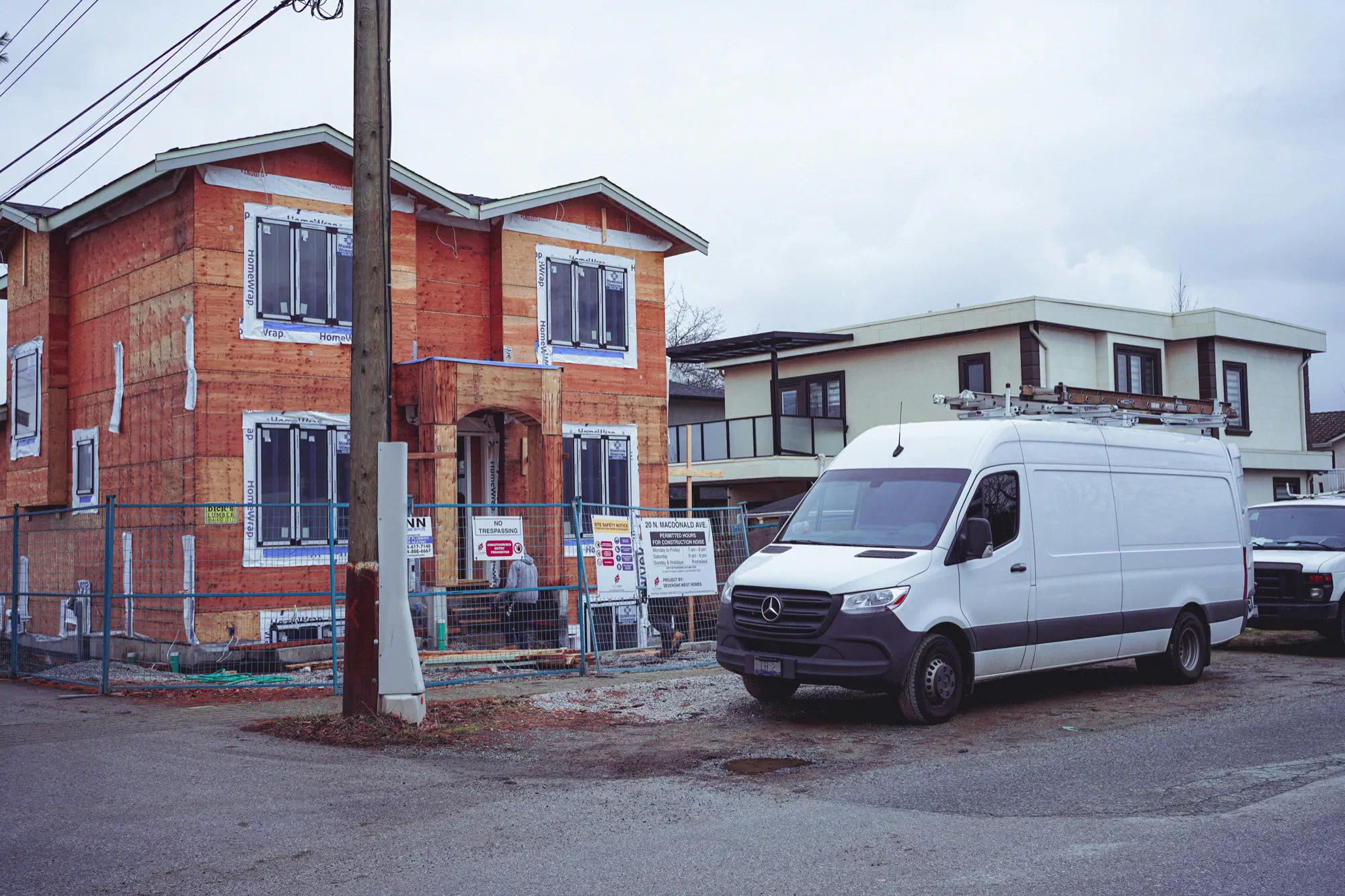
Builders Risk Insurance in Canada
Also called course of construction (COC) insurance or builder’s insurance. If fire, theft or water damage hits a building while it’s being built or renovated, builders risk insurance is the policy that pays to repair it.


What is builders risk insurance?
Builders risk insurance, also called course of construction (COC) insurance or builder’s insurance, is property insurance for a building while it’s being built or renovated. It pays to repair or replace the structure and the materials that go into it after a covered loss, such as a fire, theft or water damage.
It’s not liability cover. If someone is injured or their property is damaged, that’s general liability insurance. And it usually ends when the project does, at which point the permanent commercial property insurance takes over.
Who needs builders risk insurance?
A good test: are you building or renovating something that isn’t finished yet, and that would cost real money to repair or replace if it were damaged?
What does a real claim look like?
These examples are illustrative, not real cases. In each one, a covered loss damages a project before it’s finished, and the policy is what pays to repair it, after the deductible.
Builders risk, course of construction and wrap-up: what’s the difference?
The terms overlap, and one of them isn’t the same product at all.
| Term | What it means |
|---|---|
| Builders risk | Property insurance for a building and materials during construction or renovation |
| Course of construction (COC) | The same cover, under the name used by many brokers in British Columbia and Alberta |
| All-risk builders risk | A builders risk policy that covers any cause of loss unless it’s specifically excluded |
| General liability | Cover for injury or damage you cause to others, a different policy |
| Wrap-up liability | Liability cover for everyone working on a large project, not property cover |
| Contractors’ equipment cover | Cover for a contractor’s own tools and machinery, which builders risk generally excludes |
Who buys it, and who insures what on a project?
The construction contract decides who buys the builders risk policy, and it’s worth agreeing before work starts. This table shows the usual pattern.
| Who | Builders risk (the building) | Liability | Tools and equipment |
|---|---|---|---|
| The property owner | Often buys it | Their own liability policy | Not applicable |
| The general contractor | Sometimes buys it, if the contract says so | Carries general liability | Insures their own equipment |
| Sub-trades | Usually named on the policy, if at all | Carry their own liability | Insure their own tools |
| The lender | Often asks to be named on the policy | Not applicable | Not applicable |
When does cover start, and when does it end?
Cover is tied to the project, so timing matters. This is a general sequence, and your policy’s conditions decide.
- Before work starts: cover usually needs to be in place before construction begins, and often before materials arrive.
- If work pauses or runs late: a policy may have an end date or limits on how long a project can sit idle, so tell your insurer about changes.
- When the building is occupied or in use: cover may change or stop once someone moves in, even before the work is finished.
- At substantial completion: builders risk generally ends when the project is finished and handed over, and the permanent property policy has to start at the same moment.
A gap between the two is a common and expensive mistake. Ask your insurer what the policy says about occupancy, delays and the end date, and line up the permanent policy with commercial property insurance.
Project-specific or blanket cover?
| Project-specific policy | Blanket policy | |
|---|---|---|
| Covers | One project | Several projects over a period, often a year |
| Suits | A single build or a large renovation | A contractor who does many smaller jobs |
| Worth asking | How the start and end dates are set | How projects are reported and what the eligibility limits are |
What isn’t in the base policy, and how to add it
Some common risks are excluded unless you add them. Availability and wording vary by insurer, so ask about each one.
| Item | What it typically does |
|---|---|
| Soft costs and delay | Covers costs such as loan interest, permit fees or extra rent when a covered loss delays the project |
| Flood and earthquake | Covers damage from water coming in from outside or from an earthquake |
| Mechanical or electrical breakdown | Covers equipment that breaks down, which base policies generally exclude |
| Contractors’ tools and equipment | Covered by separate equipment cover, not by builders risk |
| Property in transit and stored off site | Covers materials that aren’t on the site yet |
The difference between hard costs and soft costs matters here. Hard costs are what physically goes into the building: materials, labour and fixtures. Soft costs are the other costs of the project, such as permits, design fees, insurance premiums and interest. Base policies generally cover hard costs, and soft costs are often an add-on.
How much does builders risk insurance cost?
There isn’t one price. What you pay depends on the project. The only reliable number is a quote for your own project, and Clearly Rate doesn’t set prices. The insurer does.
What affects the price
- The value of the project, including hard costs and, if covered, soft costs
- Whether it’s a new build, a renovation or an addition
- Where the site is, and how it’s built
- How long the project will take
- Security on site
- The deductible and any extras
- Your claims history
How to keep your premium down
Give an accurate project value, since under-stating it can cause problems at claim time. Improve site security, for example with fencing, lighting and locked storage. Ask what a higher deductible would save, and whether you’re comfortable paying that amount yourself.
Is builders risk insurance required?
No general law requires it, but it’s commonly required in practice.
| Situation | What’s usually required |
|---|---|
| You’re financing the project | Construction lenders commonly require it, and ask to be named on the policy |
| You’re bound by a construction contract | The contract usually says who has to buy it |
| It’s a public or large project | The owner or authority often sets insurance requirements |
In Ontario, owners and independent operators in construction generally need WSIB coverage too, with some exceptions. See business insurance in Ontario.
Get ready: what an insurer will ask
Having these to hand makes a quote faster.
- What the project is: a new build, a renovation or an addition
- The value of the project, including materials and labour
- Start and expected finish dates
- The address, and how the building is constructed
- Who the contractors are
- What security is on site
- Who needs to be named on the policy, such as the owner and the lender
What builders risk insurance doesn’t cover
It responds to physical loss or damage to the project. It generally won’t cover:
- Injury to other people, or damage to their property, which falls under general liability insurance
- Contractors’ own tools and equipment, which need equipment cover
- Injuries to workers, which are handled through your provincial workers’ compensation board
- Faulty design or workmanship, and the cost of fixing your own defective work
- Wear and tear
- Damage after the project ends, or once the building is occupied, unless the policy says otherwise
Exclusions vary by insurer, so read the list before you buy.
Business insurance FAQs
Who pays for builders risk insurance?
Do I need it if I already have contractors' insurance?
Does my home insurance cover a renovation?
What happens if the project runs late?
Is builder's insurance the same as builders risk insurance?
Is wrap-up insurance the same thing?
Do sub-trades need their own policy?
Ready to compare?
Tell us about your business and we'll refer you to licensed insurers.