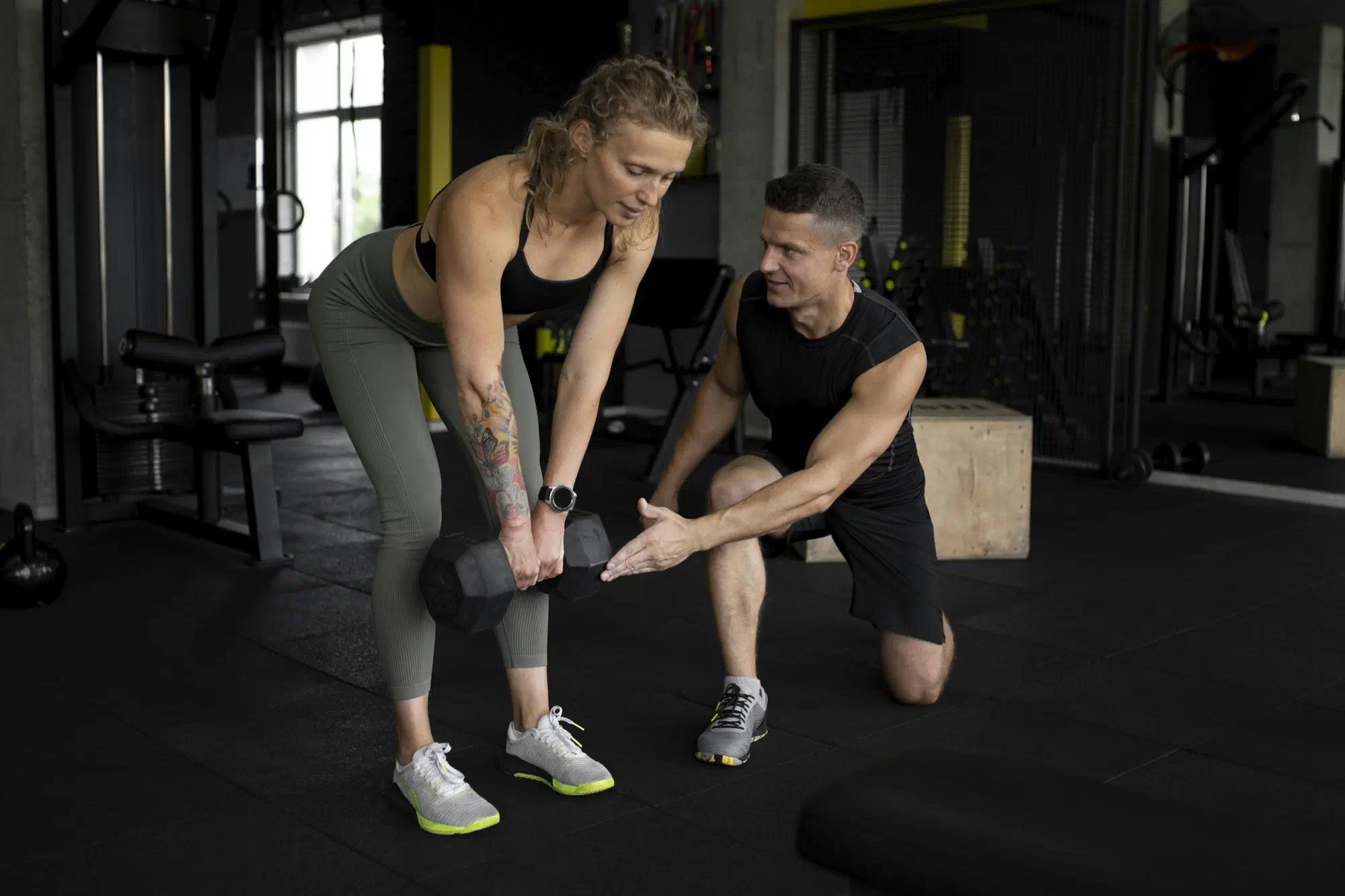
Personal Trainer Insurance in Canada
Personal trainer insurance protects you when a client is hurt in a session or says your program caused them harm. Yoga, Pilates and group fitness instructors carry the same risks, and here’s what to check before you buy, including the plan your certification body may offer.


What is personal trainer insurance?
Personal trainer insurance is usually general liability and professional liability together. It covers a client’s injury during a session and claims that your instruction or program caused harm, including the legal costs of defending you. Equipment, a rented space, online sessions and abuse cover vary from one policy to the next.
Most trainers and instructors work alone or as contractors in someone else’s gym or studio, so the policy is often the only thing standing between a client’s claim and your own savings.
Which coverage does a trainer or instructor need?
Where you train, who you train and what you teach decide it. Most start with personal trainer liability insurance, meaning general and professional liability, then add the rest if their work calls for it.
- Protects against
- A client's injury or damage to someone else's property
- Commonly needed by
- Every trainer and instructor who works with people in person
- Protects against
- Claims that your instruction, program or advice caused harm
- Commonly needed by
- Trainers who design programs, and instructors who give hands-on adjustments
- Protects against
- Your weights, mats, bands and gear
- Commonly needed by
- Mobile trainers, and anyone who owns their equipment
- Protects against
- Damage you cause to a room or studio you rent
- Commonly needed by
- Anyone who rents space by the hour or leases a studio
- Protects against
- A breach of client health and payment information
- Commonly needed by
- Trainers who use booking apps or keep health screening forms
- Protects against
- Lost income when a covered loss closes your studio
- Commonly needed by
- Studio and small gym owners
Who needs it?
Anyone who’s responsible for other people moving their bodies carries the same basic risk, whatever the class is called.
Association plans vs your own policy: what to check
Many trainers and instructors can buy insurance through their certification body or association, often at a low price, and gyms commonly accept it. But these plans vary a lot, and the price doesn’t tell you what’s left out. Whether you’re looking at an association plan or a policy from a broker, these are the questions to ask:
What does a real claim look like?
These examples are illustrative, not real claims. Whether a policy pays depends on its wording, the limits and the deductible.
| What happened | Cover that usually responds |
|---|---|
| A client drops a dumbbell on their foot during a session | General liability |
| A client says your program aggravated an old knee injury | Professional liability |
| A yoga student’s back is strained during a hands-on adjustment | Professional liability |
| A student trips over a mat in a room you rent and breaks a wrist | General liability |
| Your equipment damages the floor of the studio you rent | Tenant’s legal liability |
| Your weights and bands are stolen from your car | Equipment cover, if you added it |
| The booking app you use is breached and client health forms are exposed | Cyber |
Keeping your cover valid
Some plans make your cover conditional, and a claim can be refused if the conditions weren’t met. Read yours, but these habits are common conditions and good practice either way:
- Keep your certifications current. Some plans cover you only while your registration, and your CPR and First Aid, are valid. When one lapses, so can your cover.
- Screen every client. Many plans ask for a health screening before training starts, often the PAR-Q+, and physician clearance where the screening says so. Some ask for it to be renewed each year.
- Teach only what you’re certified in, and only the activities you declared.
- Stay inside your scope. Injury rehabilitation, diagnosis and treatment are commonly excluded.
- Keep records. Screening forms, session notes and any injury, written down the same day.
Working in a gym, studio or someone else’s space
Whether you’re covered by the gym’s insurance usually depends on how you work there. An employee may be included in the gym’s policy. A contractor, or someone renting space by the hour, usually needs their own, because the gym’s policy is written to protect the gym.
Gyms, studios and community centres commonly ask contract trainers for a certificate of insurance before you start, and sometimes ask to be named as an additional insured on your policy. If you rent a room or studio, the agreement may also ask for tenant’s legal liability, which covers damage you cause to the space. Most trainers are sole proprietors, so sole proprietor insurance covers the wider picture.
Online, outdoors and travelling
Training outside a gym raises questions your policy may answer differently:
- Online clients. Some policies include online training, some make it an add-on, and some set rules: clients registered with you, in Canada, with attendance recorded, on a private video call. A class streamed publicly on social media may not be covered at all.
- Clients outside Canada. Many policies cover Canada only, and some extend to the US or to short periods teaching abroad.
- Parks and outdoor bootcamps. Some municipalities require a permit for fitness classes in parks, and a permit may ask for proof of insurance.
- Clients’ homes. Usually covered as a place you work, but check equipment you bring and leave there.
- Retreats. Teaching abroad, and the activities around a retreat, may need cover beyond your usual policy.
Yoga instructor insurance
Yoga instructor insurance is usually the same mix of general and professional liability as a trainer’s, with a few things to check that are particular to yoga. Hands-on adjustments are a common source of claims, so professional liability matters. Hot yoga, aerial, prenatal and stand-up paddleboard classes are often rated differently or offered as add-ons, and retreats abroad may need extra cover.
If you teach at a studio as a contractor, the studio’s policy protects the studio, and usually not you. Yoga teacher insurance through an association is common and often accepted by studios, but check it against the list above, especially for adjustments, online classes and teaching outside Canada.
The same goes for Pilates and group fitness. Pilates instructor insurance needs to cover reformer and other equipment classes if you teach them, and group fitness instructors should check the class formats they teach are included.
Waivers, nutrition advice and scope of practice
A waiver can help, but it isn’t insurance. A well-drafted waiver may limit what a client can claim, but it doesn’t stop them from suing, courts look closely at its wording and how it was signed, and it doesn’t pay for a lawyer to defend you. Most trainers use both.
Nutrition advice is a common grey area. General healthy-eating guidance is commonly treated as part of a trainer’s work, but detailed meal plans for medical conditions may fall outside your policy. Dietitian is a protected title across Canada, and some provinces protect “nutritionist” too. The same caution applies to injury rehabilitation and massage-like work: if it’s outside what you’re certified to do, it’s probably outside your cover. This is general information, not legal advice.
How much does personal trainer insurance cost?
The price depends on how you work, and insurers commonly look at:
- Your certification and experience
- The activities and formats you teach, such as hot yoga or aerial
- Who you train, such as children or athletes
- In-person, online or both
- The limits you choose, and whether the policy is occurrence or claims-made
- Equipment you want covered
- Whether you rent space or employ anyone
To keep the cost down, keep your certifications current, screen every client, declare only what you actually teach, and check what your certification body’s plan includes before you buy a second policy on top. Websites quote all sorts of figures, but the only reliable number is a quote for what you teach. See how much business insurance costs for how insurers work it out.
What personal trainer insurance doesn’t cover
These are common exclusions. Your own policy may differ, so check the wording.
Personal trainer insurance FAQs
Do personal trainers need insurance in Canada?
Does the gym's insurance cover me?
Do my clients' waivers mean I don't need insurance?
Does personal trainer insurance cover online training?
Is my certification body's insurance enough?
Do yoga instructors need insurance if the studio is insured?
Does home insurance cover training clients at home?
Am I covered if I give nutrition advice?
Ready to compare?
Tell us about your business and we'll refer you to licensed brokers.